Squares
Gone for GoodSquares is Will Klein’s closest friend: a former street-life survivor turned yoga celebrity and Covenant House outreach worker whose constancy gives practical form to loyalty. He drives the battered outreach van into the city’s hardest corners, helps Will pursue answers about Sheila Rogers and Ken, and ends the story preparing to become a father with Wanda. His refusal to erase the tattoo on his forehead offers a compact statement of his outlook: the past remains visible, but it need not dictate what a person can become.
Identity and Background
Squares gets his name from the four-square court tattooed on his forehead: four blocks arranged two by two. The design began as a swastika. He altered it by adding four lines, closing the symbol into its present shape. The change is striking partly because it sits beside Will’s description of Squares as perhaps the least judgmental person he has known. Squares does not explain or apologize for the tattoo’s origin; as with Sheila Rogers, he rarely talks about his past, and others have supplied only fragments.
He could have had the tattoo removed by laser or concealed it with a more elaborate cover-up, but he chooses to keep it. When Will asks what it reminds him of, Squares answers that it reminds him of potential. The mark therefore preserves rather than conceals a history, while its altered form points toward the possibility of change. His openness about the tattoo’s past is limited, but his decision to leave it visible gives that silence a meaning: a person is not reducible to the worst thing represented by an earlier version of himself.
Squares’s public identity has also changed dramatically. His yoga school, simply called Squares, occupies a six-story walk-up on University Place near Union Square. It began in obscurity, then gained attention after a major pop star discovered him and recommended him to friends. Magazine coverage followed, including Cosmo and Elle, and an infomercial company hired him to make the copyrighted Yoga Squared Workout video. Squares is described as a believer in selling out, and he embraced the commercial opportunity; he even shaved for the recording. The unlikely distance between the tattoo’s origin, the outreach van, and the successful yoga brand makes his life resistant to a simple story of respectability or reinvention.
Outreach and Care for Street Youth
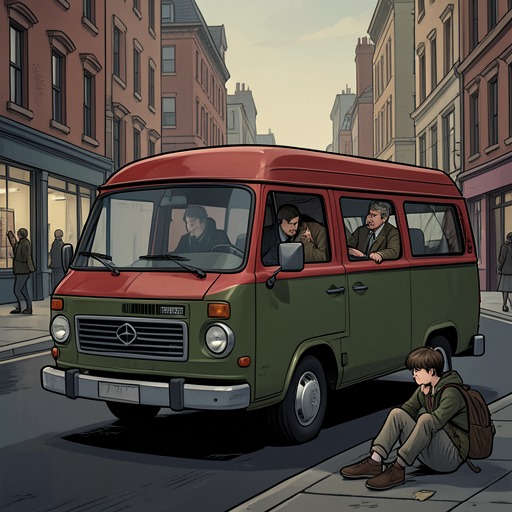
The Covenant House van is an extension of Squares’s work and a contrast to the polished public image his yoga business might suggest. It is worn and practical, carrying the smell of cigarettes, sweat, and the bologna in the sandwiches distributed at night. Its role is to reach young people who come to Covenant House as well as those who may never reach its doors without being found first. The work takes Squares into the city’s neglected street life, among runaway children and young people often dismissed as throwaways.
Squares’s method depends on returning. He brings sandwiches and blankets, uses them to open conversations, and does not take offense when a young person initially refuses help or responds with hostility. He believes that consistency matters: children must see that he will keep showing up and will not abandon them. One night a child may reject what he offers; a few nights later, that child may accept a sandwich, then a blanket, and eventually begin looking for the van. This gradual movement from distrust toward expectation is central to his work. His aid is not made conditional on immediate gratitude or cooperation.
That practice gives particular weight to the novel’s comparison between street life and a cancer: the longer a young person remains exposed to it, the harder it becomes to escape its effects. Squares does not treat the children as a problem to be cleaned away. His repeated visits, food, and warmth instead answer the conditions that make leaving the street difficult. The van is both a vehicle for rescue and a sign of the limits of rescue: Squares and Will know they lose more children than they save, yet he continues to return.
Loyalty to Will and the Search for Sheila
Squares’s loyalty to Will is expressed less through declarations than through immediate, useful acts. When Will is walking the avenues, Squares pulls the van alongside him and brings him aboard. Later, after Will has been hurt, Squares gives him a bag of ice. He also walks Will up to his apartment because he wants to show him something, then brings out a gun inside. The evidence establishes the gesture, though not what Squares intends to do with the weapon; its presence underscores how their friendship operates in the dangerous world surrounding the investigation.
He also sustains Will’s search through information and connections. When Will asks whether he ever thought Ken was alive, Squares answers that he always did, despite the arguments Will had made against that possibility. His certainty is brief but consequential: it exposes a difference between the brothers’ outlooks and refuses to let the possibility of Ken’s survival disappear. Squares later calls Will with news that they may have found Sheila. She is at the Regina Hotel, less than a mile from Will’s apartment, not across the country as they had feared.
Squares’s investigative help is resourceful rather than official. After Will asks what to do next, Squares proposes running the name Donna White through airline computers to find when she flew and where she stayed. He also remembers that Sonay practices Yoga Squared. Sonay tells him that Quick Go is run by the Muller brothers, contacts them, and enlists their help with the problem. Squares’s expanding network—students, business owners, and street contacts—lets him turn an ordinary yoga connection into a practical lead.
His knowledge of Sheila’s earlier life is painful and specific. Squares says she may have been one of the young women working the streets, and recalls that her first arrest came at sixteen. According to her file, three more prostitution arrests followed in the next eighteen months while she was working for Louis Castman. On her final arrest she was carrying two ounces of drugs and a knife; attempted charges relating to dealing and armed robbery were dismissed. Squares also questions Castman about Sheila. Castman recounts that he targeted her when she arrived as a teenager, lured her with a respectable appearance, then threatened her with a knife, restrained and drugged her, and filmed her assault to make it appear consensual. He says he kept her drugged for about a week. The account comes from Castman, but it makes the exploitation behind Sheila’s street history explicit. Squares’s knowledge places Will’s search within that history rather than reducing Sheila to a missing person or a file.
Partnership, Change, and Narrative Role
Squares’s relationship with Sheila is marked by love and by a tension Will recognizes between them. When Will insists that they love one another, Squares stops the discussion by noting that Sheila is Black. Will understands that he is not making a racist remark; rather, the difference has created strain between them, although Will believes it is outweighed by their love. Squares does not elaborate. As elsewhere, his reticence leaves a difficult part of his history visible without pretending it has been resolved.
He is also a steady presence in Will’s encounters with grief and danger. During a night of outreach, after the two have distributed phone cards and spoken with people in a heroin-affected dive on Avenue A, Squares suggests that they attend a funeral. The children remain outside at four in the morning, and the prospect of mourning sits beside the ongoing work of trying to keep them alive. His suggestion connects the immediate loss to the young people still on the street; it does not offer an easy consolation.
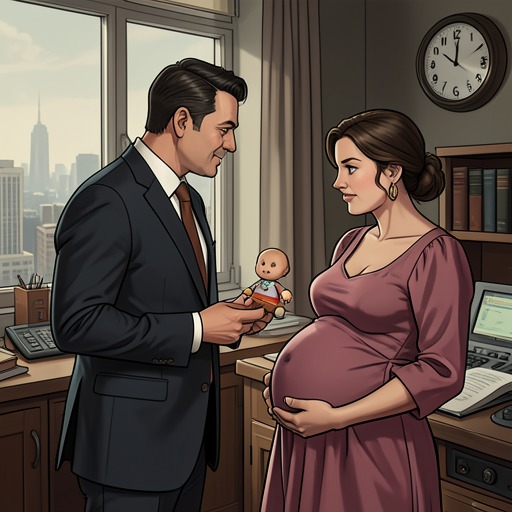
At the end, Squares accompanies Will and Nora to Newark Airport as they wait for Carly’s plane. He tells Will that he and Wanda have talked and that he told her everything. He then reveals that the two of them expect to become parents sooner than anticipated. The news turns his steady care for other people’s children toward a new responsibility in his own life. Squares stays outside while Will and Nora hurry into the terminal, but his presence has helped carry Will to the meeting. Across the novel, he serves not as a rescuer who can guarantee a happy outcome, but as someone who keeps showing up: for street youth, for Sheila’s search, and for the friend who has to face what comes next.